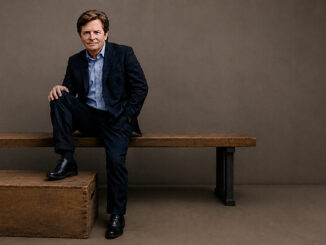

Living Well Magazine feature writer Sondra Barr sat down with former Sherman Mayor David Plyler to discuss the explosive growth that reshaped the city, the deals that brought billions in investment to Sherman, and what life looks like after nearly a decade leading one of North Texas’ fastest-growing communities.
TxDOT Road Hand Award & Highway Legacy
You recently received TxDOT’s Road Hand Award—their highest honor for a non-employee—for your work on Highway 75. What does that recognition mean to you personally, and what was the moment you knew that project would actually get done?
I was quite surprised by the award! It was a great honor to be recognized in this way by TxDot. The surprise award was given at a city council meeting and I had been encouraged by my wife Mignon to attend because of special business the council had, so I really had no idea. When our TxDot Paris district engineer and my good friend Noel Paramanantham began to speak about the award, he made reference to a ‘former mayor’ with my years in office and as president of the Grayson Metropolitan Planning Organization so at that point I knew. The award is a big deal and there were other area mayors and TxDot officials there for the award. They had even planned a nice reception afterward for me!
I have always felt like I share the award. There were so many that worked very hard and made investments in Highway 75, so the award should be given to the entire team.
The project itself was a huge undertaking for a city our size. The project was divided into four separate phases for construction, and the plan was to get approval for each phase to make it more attractive to TxDot to fund and to make local participation levels feasible. Once the county and the City of Sherman reached a certain level of participation, TXDot agreed to fund the first phase and design the full upgrade. This was huge because Highway 75 has not been improved at all through south Sherman and the improvements north of Travis Street had failed leading to highway panels to misalign and create unsafe conditions.
The Highway 75 reconstruction is a $750 million undertaking. For readers who sit in that construction traffic every day, can you walk them through exactly what it took behind the scenes—the meetings, the lobbying, the coalition-building—to move a project of that scale from wish list to reality?
The journey to construction on 75 was genuinely a picture-perfect example of what local governments can accomplish working together. From the initial meetings at our local TxDot offices to bid letting there were a number of people involved with the same goal. The county judge at the time was a huge advocate for the highway, and working with our district engineer brought it forward to the TxDot Commission for consideration. We also gathered up local participation financially and with the help of the city council and city staff the project was viable on our end and conditions met for the state to consider funding the project. Once the first section was approved for funding by the state, the next two phases were funded quite quickly. I suspect that Governor Abbott had a hand in moving the next phases forward ahead of the established dates due to the new industry in Sherman. This is a large project for TxDot and it was needed. I appreciate the patience of the people of Sherman and I know it is inconvenient to have the highway under construction but it is going to be so much safer and easier to move around the city when it is complete.
You’ve described the old highway as genuinely dangerous, with fatalities over the years. How do you carry something like that—knowing lives were at stake—while navigating the slow machinery of government and funding?
Highway 75 through Sherman was notoriously dangerous. The high speeds and tendency to pool water led to many accidents and conditions that were unacceptable to a growing, thriving city. The county judge and myself, along with our city manager and city engineers and the Metropolitan Planning Organization (MPO) began to lobby the commission to try to create conditions that would result in the project being funded. It was a process to be sure! Navigating funding sources, requests, planning local participation, and getting our story out was a huge ordeal. The safety of the highway was our main concern and we had the data to make our case.
Mayoral Legacy & Sherman’s Transformation
When you took office in 2015, Sherman was ranked as a great place to retire. When you left, it had been designated a federal High-Tech Hub with $35 billion in committed investment. If you had to point to the single decision that changed Sherman’s trajectory most, what would it be?
I would say that Sherman always has had unlimited potential. From the very beginning, our city has been a great place for manufacturing and has a fantastic business environment. That gave us the courage to “get to yes” with putting these often together. The council and city staff was very supportive and enthusiastic, although we knew that if we were successful a huge infrastructure project would be required with a full buildout of water and wastewater systems on the west side of the community. The decision to offer Texas Instruments an incentive package and aggressively compete for the facility was the defining moment that positioned Sherman, Texas, as a player in the international market and earned it designation as a federal “High Tech Hub.”
Landing Texas Instruments and GlobalWafers, companies that transformed Sherman’s economic identity, didn’t happen overnight. What do you know now about recruiting industry that you wish you’d known at the start?
That’s a great question. I think we were all in uncharted territory, and I can’t think of another city that has been able to provide—and continue providing—the infrastructure and support needed for manufacturers of this size. There are cities that have landed a single plant, such as Taylor, but having two multibillion-dollar plants, in addition to our existing manufacturers, is virtually unheard of for a city our size. One thing that I wish I had known in the beginning: I could have used a tutorial on how the international competition for these manufacturers was going to play out. Both Robby and Kent guided the process, and it was definitely a learning experience for me.
The process was interesting to be sure. Robby Hefton, our city manager was really the ‘engine’ of the deal with countless spreadsheets full of very important numbers along with Kent Sharp and his staff providing funding and abatements as well. There were many meetings and conference calls with a lot of back and forth to get to these agreements, but my overall view was that both these companies wanted to be in Sherman and we certainly wanted them here. One thing about the recruiting process I learned was how aggressive and political the process is at this level of investment. Competing internationally was new and having great incentives along with having resources these plants need put us in the driver’s seat.
You’ve been candid that Sherman’s growth has slowed somewhat since you left office, and that you’re disappointed to see the overall demand for semiconductor products soften. What are the implications of this for Sherman?
Before the announcement of the new Texas Instruments facility, our local economy had steady growth with a few new housing developments and multi-family developments already breaking ground. I would say this would be the natural growth that would come organically in the city. Once Texas Instruments announced the large number of jobs that would be created, the real estate market was supercharged, and single-family and multifamily developments seemed to appear overnight. Once the semiconductor market slowed, so did the real estate and support business environment. While Sherman has a great mix of other industries, we can be sure the need for semiconductors will increase once consumer spending increases. With this type of industry, our local economy is now tied more closely with the national and international economic trends than it has been in the past. The good news is, Sherman is welcoming to all types of manufacturers and I am hopeful our strong economic development folks can recruit some of these industries.
The Transition From Mayor to Private Citizen
After nine years as mayor, you told me you still pick up your phone sometimes when you see something in the paper—and then remember it’s not your place anymore. What has that adjustment actually felt like, day to day?
I went through a process of letting go and that took some time. I actually started on the Planning and Zoning Board in 2011 so I have been serving for quite a while. There were days that I asked some questions but never interfered with an issue. I do miss our city staff and employees, so many of them are my friends and I was so lucky to have served with a group of such talented individuals. One thing that was particularly difficult to let go of was the Hot Summer Nights concert series. Our committee had developed this series from a local-based show into a series featuring well known and very talented groups. We hosted several Rock & Roll Hall of Fame groups while still maintaining a local feel by featuring opening acts from the area at each show. We were a tight-knit group and I miss working with my friends in planning meetings and concerts.
Is there a project you championed that you wish you could have seen across the finish line yourself? Something that felt unfinished when November 2025 came?
Yes absolutely. I would have liked to have seen the completion of our infrastructure projects and the next phase of Highway 75. However, the projects are in good hands and I have full confidence that they will be completed in good order.
You governed as a very pro-business, development-minded mayor. Now that you’re watching from the outside, what does it feel like to see others steward the city you helped build?
It’s a different mindset to be sure. Many times, I want to pick up the phone or stop by City Hall, only to remind myself that it’s not my job anymore. The current mayor and council have it under control and I cheer for their success. Robby and I had our priorities and vision for the city and we had our time. Sherman’s future is all upside from here.
Plyler Construction & Community Work
For years, Plyler Construction couldn’t bid on city projects because of conflict-of-interest rules. Now that you’re out of office, you’re doing the fire station renovation for Sherman. What does it mean to serve the city in that way, through the company your grandfather founded in 1962?
I am blessed to live and work in the City of Sherman. The interesting thing about being here is the city’s long history and legacy of excellence in design and construction of our municipal facilities. Our firm built the Sherman Post Office on Mulberry Street used currently as City Hall. It was fun to go and work in the first building we built back in 1962. We have over the years been fortunate to have built many Sherman legacy buildings that are in use today. In moving past my terms as mayor, I have found that being a part of the construction team for some of these city facilities is an extension of my service to the citizens.
It’s been a real honor to build in my home town and it is a great way to continue to serve our great city.
Plyler Construction has earned significant safety recognition, including a national award. In an industry where safety shortcuts can be quietly tempting, what’s the culture you’ve built, and how did your grandfather’s legacy shape it?
It’s been quite a journey through the decades. Our company is a family business, so we have had consistency in our management from day one. Our average employee tenure is over 18 years and we have little turnover creating an environment of consistency and purpose. We have also developed resources such as our AISC certified Steel Fabrication Plant and Steel Erection Services. We also offer in-house mechanical and electrical services, a rarity in the business. These specific resources eliminate the “pinch points” in most construction projects and allow better control of cost and schedule. This stems largely from our history of using the design-build construction delivery method, which is very similar to the construction manager-at-risk delivery system. We also can competitive bid, negotiate a time and material relationship, and many other delivery systems depending on the needs of our customers. The culture that my grandfather created has served us well through the decades integrating customer service, project safety, and timely completion in each and every project.
Public Service Philosophy
You’ve said economic development is a cure for poverty—that opportunity is how you lift people. How did you develop that philosophy, and has anything you witnessed during your tenure challenged or deepened it?
My first public speech as mayor was an address honoring Martin Luther King Jr. Day in the City of Sherman. One of his quotes is “A rising tide lifts all boats.” My comments were focusing on what can happen when we work together with a common goal. My aspirations were and always have been to maximize opportunity for everyone in the city to have a good job and to realize their own dreams and ambitions. There’s not a magic formula to job creation. If companies are recruited and businesses grow, they will need employees. Employees need housing, streets to drive on, schools to teach their children, places to attend church, fire stations and police protection, restaurants, etc. The effect is exponential in nature. Each primary job creates several secondary jobs.
Hot Summer Nights has been one of the most beloved community touchstones under your tenure, drawing 14,000 people to a single show. What does a free concert in Kidd Key Park tell you about what a city actually is?
The Hot Summer Nights series is very special to me. When I first became mayor, our new Tourism Director Sarah McRae happened to be in the city manager’s office discussing how we were going to recruit bands to play HSN with a very limited budget. We had a good discussion with the city manager about what was possible. We had some great sponsors step up and used a bit of motel/hotel tax dollars and now the series is known statewide as one of the largest free concert series in any municipality. People come from all over. Typically, crowds range from 3,000 to 4,000 people at Lucy Kidd-Key Park and well over 14,000 at our annual fireworks show, Lights on the Lake.
You ran a construction company and a city simultaneously for nearly a decade. What skills transferred most directly from the jobsite to the council chamber—and were there any that actually got in your way?
The tasks were very similar in nature. The correlation between the two was fairly easy to establish and I was fortunate to have a great staff at the city and a great staff at my company. I am not a micro-manager and found it to be empowering to let the experts do their jobs and to get involved when required. I was blessed to have served under a fantastic city manager and city staff and they made it incredibly easy to serve as mayor. Our City Charter is structured so the mayor and city manager work collaboratively, with clear lines drawn between the roles of elected officials and city employees. There was not really anything that got in the way per se, the challenge became time management. There was so much I wanted to do as mayor, such as showing up to various events and meetings in the community, so there were some conflicts from time to time.
What’s Next—Including a Possible State Run
You mentioned you haven’t ruled out running for a future office. For voters who might be hearing that for the first time, what would you want them to understand about why someone with your background having served as mayor for nine years?
I did enjoy serving as mayor and working to make Sherman a great place to live and work and to raise a family. I tend to have a holistic view of the city and focus on areas that I sense need attention. My terms as mayor reflect that: new, safe highways, new streets in congested areas, job availability, updated city parks, more housing options, and much more.
State-level politics in Texas right now is fierce and fractious. What’s your read on what North Texas needs most from its state representatives—and do you feel like it’s currently getting that?
Our state representation has been strong. As mayor, I could meet with our state representative and state senator at any time. Both provided strong support in our economic development efforts and attended several meetings with the prospective industries. I do believe there could be more attention given to rising valuations and property taxes. As a high-growth area, higher property values can raise the taxes owed without consent. I hope Austin addresses this soon.
You’ve spent your career working within systems—city government, the construction industry, TxDOT, the Metropolitan Planning Organization. Is that coalition-builder skillset something you think Austin is missing?
I believe any time a governmental body is less focused on citizen’s needs and more focused on other things the less useful it is for the people. What we tried to do is focus on what was best for Sherman and it’s citizens and with that mindset were generally were together with the policy. Once that mindset is lost, the government fails the people.
On Perspective & Legacy
You joked about “post-mayor trauma,” but there’s real truth buried in that. What’s the hardest thing you’ve had to let go of since leaving office—and what have you discovered you don’t miss at all?
The hardest thing I believe I have had to do is say goodbye to working with such a great group of people. Many felt like family and to stop working with them all at once was a big change. We developed such a great working relationship and it made things so easy. On the opposite side of that, I do enjoy having time back to spend with family and at home.
If someone in Sherman who was 10 years old when you became mayor asks you someday what you did for their city, what do you most want to be able to say?
I would say that during my time as mayor I worked as hard as I could every day to make Sherman the best city in the nation.